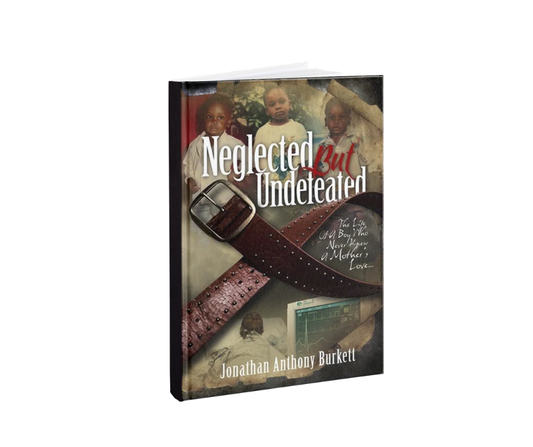
By Jonathan Anthony Burkett
A reflection drawn from my autobiography, Neglected But Undefeated.
The date that changed the question
In the closing narrative chapter of Neglected But Undefeated, I place my brain surgery on January 30, 2006. Two days later, on my birthday, I describe looking at the time ahead as an opportunity for a new direction. The significance was not that every problem had disappeared. It was that I had survived an experience I had feared, and now had to consider what I would do with the life still in front of me.
The difference between those two questions is important. Before surgery, much of my attention was on whether I would make it through. Afterward, I had to ask how I wanted to live. That second question did not arrive with a finished plan attached. I still needed health, stability, work, and somewhere dependable to stay. Hope was present alongside practical needs. The beginning was meaningful because it happened within those circumstances, rather than after they had all become easy.
The memoir includes medical material reproduced from the period, as well as my own memories and feelings. I want to be accurate about the distinction. My personal account explains what I understood and experienced; it is not medical advice to another person. The date in this edition matters when telling my story, but someone else's care and recovery will have their own facts, decisions, and professional guidance. A meaningful experience should not become an unsupported promise about another person's outcome.
A new direction still needs ordinary work
A turning point can be powerful without doing the work that follows it. Waking up after an operation did not automatically provide a job, repair every relationship, or give me a complete understanding of myself. In the book, I describe wanting to regain stability and prepare for a loving family. Those wishes gave me direction. They also required actions that were less dramatic than the moment in which I first said I wanted to change.
Beginning again is often described as though a person can leave an old life behind in a single movement. My experience gives me reason to be more careful with that picture. Memories continue, responsibilities remain, and a person can feel determined in the morning and uncertain by evening. The presence of uncertainty does not mean the decision was false. It means the decision has entered the ordinary world, where it needs patience, information, support, and revision.
One way to respect a new beginning is to give it realistic proportions. A person may need to identify the next appointment, the next housing question, or the next conversation about work. Those tasks do not have the emotional force of a public declaration. They do have consequences. An intention becomes more useful when it is connected to something that can be completed, reviewed, or discussed with someone who is able to help.
Making room for help
When I remember that period, I also remember the people whose efforts belong in the story. Hospital staff, friends, and others offered care or helped connect me with possibilities. In the autobiography, I describe Marise's efforts to coordinate access to a surgeon. Naming help matters because survival stories can become distorted when they are told as evidence that a person needed nobody. Determination and receiving assistance can belong to the same account without either becoming less meaningful.
There can be dignity in accepting help, and there can be difficulty in learning how to do it. A person may want independence so strongly that an offer feels like a reminder of what they cannot yet provide for themselves. My memoir contains that tension. Looking back, I can recognize how much practical support mattered while also remembering the discomfort and defensiveness that sometimes shaped my responses. Growth can include admitting both truths without trying to make the earlier version of yourself look perfect.
For someone offering support, a specific question may be more useful than a large promise. Is there a practical task that would help? Does the person want company, information, or space? What can you actually follow through on? These are everyday reflections, rather than instructions for managing a medical recovery. The person receiving care should have a voice in what is offered, and appropriate professional advice should guide questions that belong to health care.
Keeping a promise without demanding perfection
On the birthday described in the book, I wanted the time ahead to mean something. I wanted a different relationship with my future. That desire did not require me to know every answer immediately. It did ask me to take my life seriously enough to keep learning what the next responsible step might be. A promise to change can begin there: with an honest direction and a willingness to return to it after a difficult day.
Perfection can turn that promise into a trap. If every setback becomes proof that nothing has changed, a person loses the ability to see partial progress accurately. It is more useful to examine the particular event. What happened? What remains possible? What needs support or a different plan? Those questions leave room for accountability without turning one disappointing moment into a complete description of a life. A beginning needs enough honesty to notice mistakes and enough patience to keep working.
The birthday also reminds me that a future does not have to be impressive to be worth protecting. A safe place to rest, meaningful work, trustworthy relationships, and the ability to care for a family are substantial hopes. They are not lesser ambitions because they do not produce an exciting headline. Much of what I wanted after surgery concerned the ordinary conditions in which a person can build a life with dignity and give love consistently.
I share this part of my story because beginning again can be both hopeful and unfinished. A person may stand at a turning point without feeling fearless. They may need help before they can act on a plan. The next chapter can still deserve attention. For me, the birthday after surgery marked a decision to work toward a different life. The meaning of that decision would have to be built through the days that followed.
Read Neglected But Undefeated, explore my books and more of my quotes.
#upstormed #jonathananthonyburkett #jonathanburkett #NeglectedButUndefeated #NewBeginnings
Comments
Post a Comment