By Jonathan Anthony Burkett
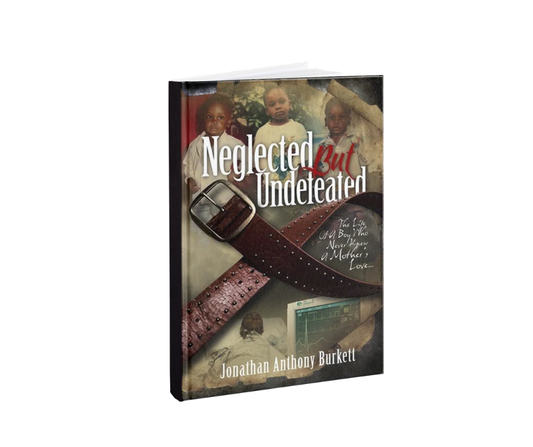
A reflection drawn from my autobiography, Neglected But Undefeated.
A word that includes other people
In the poem Blessed, near the end of Neglected But Undefeated, I describe gratitude for the love and guidance people brought into my life. The poem matters because it does not leave survival entirely in my own hands. There are people in the story who notice, encourage, offer help, or remain present when I am struggling to see a future. The word blessed carries that recognition, alongside the Christian faith through which I understand the journey.
One short excerpt reads, “I am happy and thankful / For all the love and guidance / Many came into my life / Delivering unto me.” The slashes indicate the original line breaks. The language turns attention outward. It recognizes that help arrived through actual people, sometimes when I was not ready to receive it well. That is a more demanding kind of gratitude than a general statement that life eventually improved. It asks me to remember who contributed and what their contribution made possible.
I do not read the poem as a claim that every hardship was necessary or that suffering automatically produces a reward. It records a personal response to what I had lived through and to the care I had received. A person can be thankful for help without being thankful for the circumstances that made the help necessary. Keeping that distinction clear allows gratitude to remain honest instead of turning it into an instruction to call every painful experience a gift.
Help has ordinary forms
In the acknowledgments of my autobiography, I thank relatives, my brothers, medical staff, friends, people who offered food or shelter, and others who encouraged me. Some contributions were practical and immediate. Others helped me imagine a different direction. Those forms of support are not interchangeable. A meal does something different from advice, and medical care does something different from companionship. Each deserves to be understood in relation to the need it actually met.
That is one reason specific gratitude can be powerful. Saying that someone gave you a place to rest recognizes their act more clearly than describing them only as an inspiration. It also reminds a reader that care has material forms. We can speak beautifully about helping one another while overlooking the ride, appointment, phone call, or ordinary task that would make a real difference. Attention to the practical details keeps the idea of kindness connected to the circumstances of a life.
Some people who helped me were themselves living through difficult circumstances. I do not want their kindness erased by a simple category placed around them. A person can have problems and still offer another person something valuable. The memoir includes that complexity. It is possible to appreciate a contribution without claiming that the giver had every answer or lived without mistakes. Gratitude becomes more truthful when it allows the other person to remain fully human.
Receiving care was not always easy
My story also describes defensiveness and times when I insisted that I did not need help. I want to keep that part in view when discussing gratitude. It is easy to imagine receiving kindness as a graceful scene in which everyone says the right thing. In life, an offer may meet pride, uncertainty, embarrassment, or an expectation of disappointment. The person offering support may not immediately see what their effort means, or whether it has made any difference.
Recognizing that difficulty does not give a recipient permission to mistreat a helper. It does give us reason to avoid judging the value of every act by the first response it receives. Some words become meaningful later. A practical kindness may be remembered after a person has enough stability to think about it clearly. Where boundaries and circumstances allow, support can remain patient without becoming unlimited. The helper is also a person with needs and responsibilities.
For someone learning to accept care, a useful beginning may be an accurate description of what would help. A person does not have to tell their whole history in order to ask a specific question. They can also say what they are not ready to discuss. An honest limit can make assistance clearer for everyone involved. Receiving help does not require surrendering all privacy, and offering help should not make another person's story a possession.
How gratitude can move forward
Gratitude can lead to a thank-you, but it can also influence how we treat somebody else. The exact act may not be repeatable. A person who received hospital care will not necessarily become a medical professional. Someone helped with housing may not have a spare room to offer. There may still be another contribution within reach: careful attention, useful information, a small practical task, or a dependable response to someone who needs one.
It is important to keep those offers proportionate. Wanting to repay all the kindness in your life at once can lead to promises you cannot sustain. A smaller action, completed honestly, may be more useful. The purpose is not to create a flattering story about being generous. It is to notice another person's actual need and consider whether you can help without taking away their voice or making them responsible for your sense of purpose.
The poem's title also reminds me to look at what is present before measuring what is missing. That does not mean ignoring loss, unfairness, or unfinished work. It means giving accurate attention to both. A day can contain difficulty and a meaningful act of care. A future can remain uncertain while still containing possibilities worth protecting. Gratitude is more dependable when it can acknowledge that complexity rather than requiring a cheerful account of every circumstance.
Blessed belongs near the close of the book because it helps explain the direction I want to carry beyond its final pages. I want the help I received to remain part of how I understand my life. Remembering those people keeps the story connected to more than endurance. It connects it to relationship, responsibility, faith, and the hope that something offered to me can become care I offer wisely in another person's life.
Read Neglected But Undefeated and explore more of my quotes.
#upstormed #jonathananthonyburkett #jonathanburkett #NeglectedButUndefeated #Poetry
Comments
Post a Comment