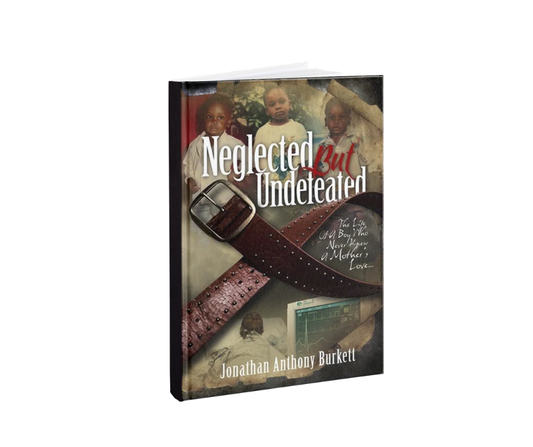
By Jonathan Anthony Burkett
A reflection drawn from my autobiography, Neglected But Undefeated.
Why share an unfinished story?
Near the end of Neglected But Undefeated, I acknowledge that there are questions in my life that remain unanswered and dreams I still want to pursue. That admission matters to the kind of story I am telling. A book can reach its final page while a life continues. Sharing the book does not mean every relationship has been resolved or that I can explain every event with certainty. It means there is a part of the journey I am ready to describe.
The questions in this article are newly written prompts for reflection, not a transcript of an interview. The answers draw on themes and experiences recorded in my autobiography. I want that distinction to be clear because a reader deserves to know what kind of writing they are meeting. A reflective article can explore the meaning of a published story without inventing a new conversation or presenting an imagined question as something someone actually asked me.
Does understanding the past require knowing everything?
I do not think complete information is always available. Memories have limits, other people may remain silent, and an explanation may never arrive in the form we hoped for. The memoir itself is framed as an account of events as I remember them. That does not make the effort to understand pointless. It makes accuracy about what I know, what I believed at the time, and what remains uncertain part of the responsibility of telling the story.
There can be a practical difference between seeking useful understanding and postponing every future decision until the past is fully explained. A person may still be able to choose what kind of conduct they want in their own life, identify support, or begin a piece of work. Those choices do not erase unanswered questions. They allow a future to develop alongside them. The next step can have value even when the whole history remains incomplete.
What did love mean in the story?
Love becomes recognizable through particular people and acts. My grandfather's presence, my grandmother's care, my brothers, and the help offered by others give the word substance. The book also describes longing for affection and the difficulty of expecting one relationship to fill every empty space. Those strands belong together. I can appreciate love I received while also acknowledging how strongly I wanted more and how that longing sometimes influenced my judgment.
For a reader, the useful question may be how care becomes visible in their own relationships. It might involve time, attention, honesty, practical assistance, or a dependable response. Different people will express it differently. An impressive declaration cannot substitute indefinitely for behavior, and a quiet act should not be overlooked because it lacks dramatic language. Understanding love requires attention to what the relationship actually contains, rather than only what we hope it contains.
Can a person change without becoming perfect?
My closing reflections contain a commitment to a better direction, alongside an acknowledgment that I continue to make mistakes. I do not want to remove that tension in order to make the story easier to advertise. Change is more believable when it can survive an honest description. A person may have learned something important and still need practice, support, and correction. The presence of unfinished work does not make every earlier effort meaningless.
It is useful to give responsibility a specific object. Instead of declaring an entire life a success or a failure, look at the choice in front of you. What happened? What was within your control? What could you do differently? Is there something to repair or someone to update? These questions do not guarantee that a problem will be resolved. They create a clearer place to begin than a sweeping judgment about the kind of person you will always be.
What role does faith play?
Christian faith is central to the memoir, but my account includes doubt, anger, prayer, gratitude, and renewed commitment. I want to preserve that movement rather than suggest that I felt certain at every moment. Faith, as I describe it in the book, becomes part of how I interpret survival and imagine a future. It is also connected to people whose encouragement helped me consider a different direction when my own view had become narrow.
That is my personal account. Readers may have different beliefs and different ways of understanding their experiences. I do not need them to pretend otherwise in order to consider the human questions in the story. What gives you a reason to act responsibly? Who helps you remember that your future matters? What allows you to remain open to help? A conversation can recognize those questions without requiring everyone to arrive at the same language for answering them.
What does success mean after these experiences?
The book connects my ambitions with stability, writing, responsibility, and the wish for a loving family. Success is not only an audience or a number. It includes the conditions in which a person can work, rest, give care, and make decisions with more freedom. That does not mean public achievements are unimportant. It means I want them connected to purposes that retain their meaning after the attention surrounding an achievement has moved elsewhere.
There is also value in noticing the people whose efforts made progress possible. A story becomes less accurate if it gives all the credit to individual determination and leaves out food, shelter, medical care, teaching, encouragement, or practical help. I can recognize my choices while thanking the people who helped make other choices available. Gratitude and agency are not competing explanations. In a real life, they can belong to the same account of moving forward.
What can a reader carry away?
I hope the story encourages a reader to look beyond the brief description attached to another person's name. A difficult moment, a reputation, or an outward appearance may leave out much of the life behind it. That does not remove the need for judgment or boundaries. It asks that understanding be given a fair opportunity before certainty takes over. A person can be held responsible while still being seen as more than one action or one period of their history.
An unfinished story can therefore offer a complete invitation: pay attention, ask honestly, appreciate real help, and consider the next responsible choice. I still have questions. The memoir does not conceal that fact, and these reflections should not conceal it either. A meaningful future does not require every earlier page to become simple. It requires enough willingness to keep building a life while acknowledging what remains unresolved.
Read Neglected But Undefeated and explore more of my quotes.
#upstormed #jonathananthonyburkett #jonathanburkett #NeglectedButUndefeated #LifeLessons
Comments
Post a Comment