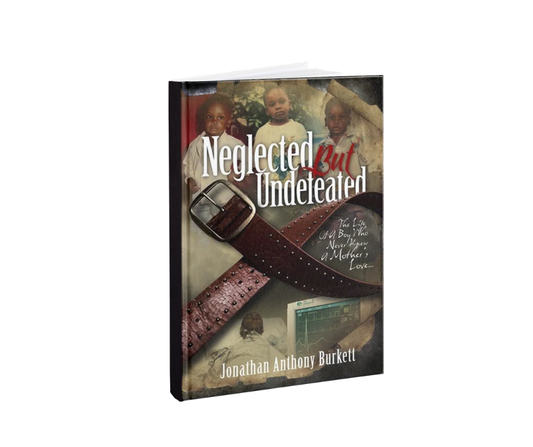
By Jonathan Anthony Burkett
A reflection drawn from my autobiography, Neglected But Undefeated.
A memory with people inside it
In Neglected But Undefeated, I remember my grandmother's shop in front of our home in Jamaica. People knew her through that shop, and I remember her smiling and encouraging me to appreciate what I had. As a child, I did not always understand that outlook. I heard people talking about making money, and I wondered how someone could remain so thankful without having much of it. Her happiness challenged an explanation of success that I had barely begun to question.
That memory stays with me because the shop was part of a larger world of people. My grandparents, relatives, neighbors, and familiar faces gave everyday life its shape. I was not taking notes for a business book. I was a child noticing who came around, how people spoke, and how it felt to be surrounded by family. The meaning of the place came through those experiences, rather than through a calculation of what everything might be worth.
Looking back, I can distinguish appreciation from the idea that material needs do not matter. Food, housing, clothing, and stability matter greatly. My own story gives me no reason to dismiss them. The question my grandmother's example leaves with me concerns what money can and cannot describe. A household can need more resources and still contain relationships worth appreciating. Naming what is valuable does not require pretending that practical difficulties have already been solved.
What a child notices about wealth
As a boy, I associated wealth with the possibility of having more freedom and fewer problems. I do not think that wish requires a complicated explanation. When people around you speak about making money, money can begin to look like the answer to almost every question. What I understood less clearly was the difference between wanting resources for a purpose and allowing the idea of wealth to become the only description of a worthwhile life.
My grandmother's advice pointed toward people who were already beside me. Her gratitude was specific enough to have names and faces. There were people who fed me, cared about where I was, and made room for me in their days. Those experiences did not arrive with a price attached. They nevertheless influenced what I would later want from relationships, from a home, and from the kind of family life I hoped to help create.
That is why I want to be careful with the phrase having enough. It should never become a convenient instruction that people with unmet needs ought to accept less. A person knows concerns about their own circumstances that an observer may not see. The more useful question is personal and concrete: what am I hoping additional resources will allow me to do, and which parts of that hope also depend on attention, honesty, time, and care?
Gratitude that can notice a need
There is no contradiction in thanking someone for a meal and wanting a more secure way to provide meals tomorrow. Gratitude and improvement can occupy the same life. In fact, understanding what has helped us can make our goals clearer. If a stable home mattered, that may guide the kind of security we want to build. If patient attention mattered, that can influence how we use the time that greater stability makes possible.
I also think gratitude becomes more meaningful when it does not hide the giver's effort. Food has to be prepared or obtained. A shop has to be attended to. A visit requires time. A ride means someone has arranged part of their day around another person's need. Recognizing those ordinary contributions can make appreciation more accurate. Instead of thanking somebody only for being wonderful, we can notice the actual work through which their care reached us.
For a child, those details may take years to understand. I could enjoy being cared for long before I understood what adults had to arrange in order to provide that care. Looking back creates an opportunity to see more. It does not require inventing private conversations or pretending that I now know every difficulty my grandparents faced. I can acknowledge that my childhood view was limited while still honoring what their presence meant to me.
A different question to bring home
The family shop is not a formula that every household can reproduce. Families have different resources, histories, needs, and ways of organizing their lives. What I carry from that memory is a reason to look more carefully at the sources of value already around me. Who makes an ordinary day easier? What work has become so familiar that I have stopped seeing it? Is there a thank-you that could become more specific and useful?
These questions can change how a person thinks about ambition. I still believe in working toward a better future. The point is to give that future a purpose that survives comparison with somebody else's possessions. A goal may concern helping a relative, providing a safe place to rest, making creative work possible, or having enough time to be present for the people you love. Those purposes can make effort more intelligible when progress is slow.
It is equally important not to turn a memory of togetherness into a demand that someone remain in a difficult relationship. Appreciation does not remove the need for boundaries. A person may value particular acts of kindness while also making decisions about what is healthy or possible now. The past does not have to become perfect before we can learn from it, and a lesson does not have to apply to every circumstance to be worth considering.
When I return to the picture of my grandmother smiling near the shop, I see more than a contrast between wealth and poverty. I see an early encounter with a question I would carry into adulthood: how will I recognize a good life while I am still working toward it? Her example directs my attention to people, practical care, and the ability to be thankful without giving up on improvement. That is a memory with room for both appreciation and ambition.
Read Neglected But Undefeated and explore more of my quotes.
#upstormed #jonathananthonyburkett #jonathanburkett #NeglectedButUndefeated #FamilyStories
Comments
Post a Comment